Why energy savings
A fast, fair and attractive energy transition energy efficiency directiveenergy efficiency firstReducing energy demand is the bedrock to lower energy bills and ensure an independent, inclusive, and climate neutral EU. Reducing energy consumption through energy efficiency measures brings multiple benefits for citizens and society as a whole, with reduced energy imports, lower greenhouse gas emissions, a cut in energy bills, improved health for EU citizens and new and local jobs.
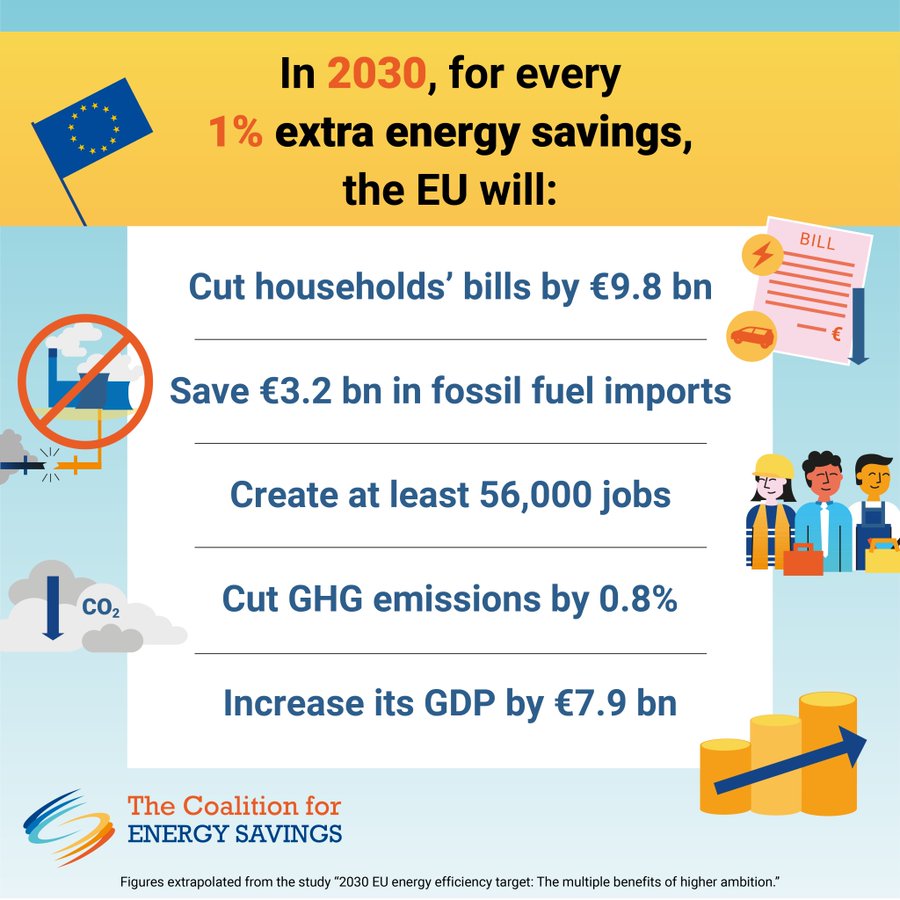
For example, as modelled in a recent Cambridge Econometrics’ study, each additional 1% increase of the 2030 energy efficiency target in the recast Energy Efficiency Directive (EED) would in 2030:
- Reduce by 9.86 billion euros energy and transport bills for households in the EU.
- Save 3.2 billion euros in fossil fuel imports.
- Reduce by an additional 22.7MtCo2eq EU’s greenhouse gas emissions (or about a 0.8% cut).
- Create at least 56,000 jobs.
- Increase the EU GDP by an additional 7.9 billion euros.
The benefits of enhanced energy efficiency policies are clear: they must guide policymakers at the EU, national and local levels in their work to implement the energy efficiency legislation.